2025
Quantifying Fairness in Spatial Predictive Policing
Diego Hernández, Cristian Pulido, Francisco Gómez
Submitted to Artificial Intelligence and LawMajor revisions Spotlight
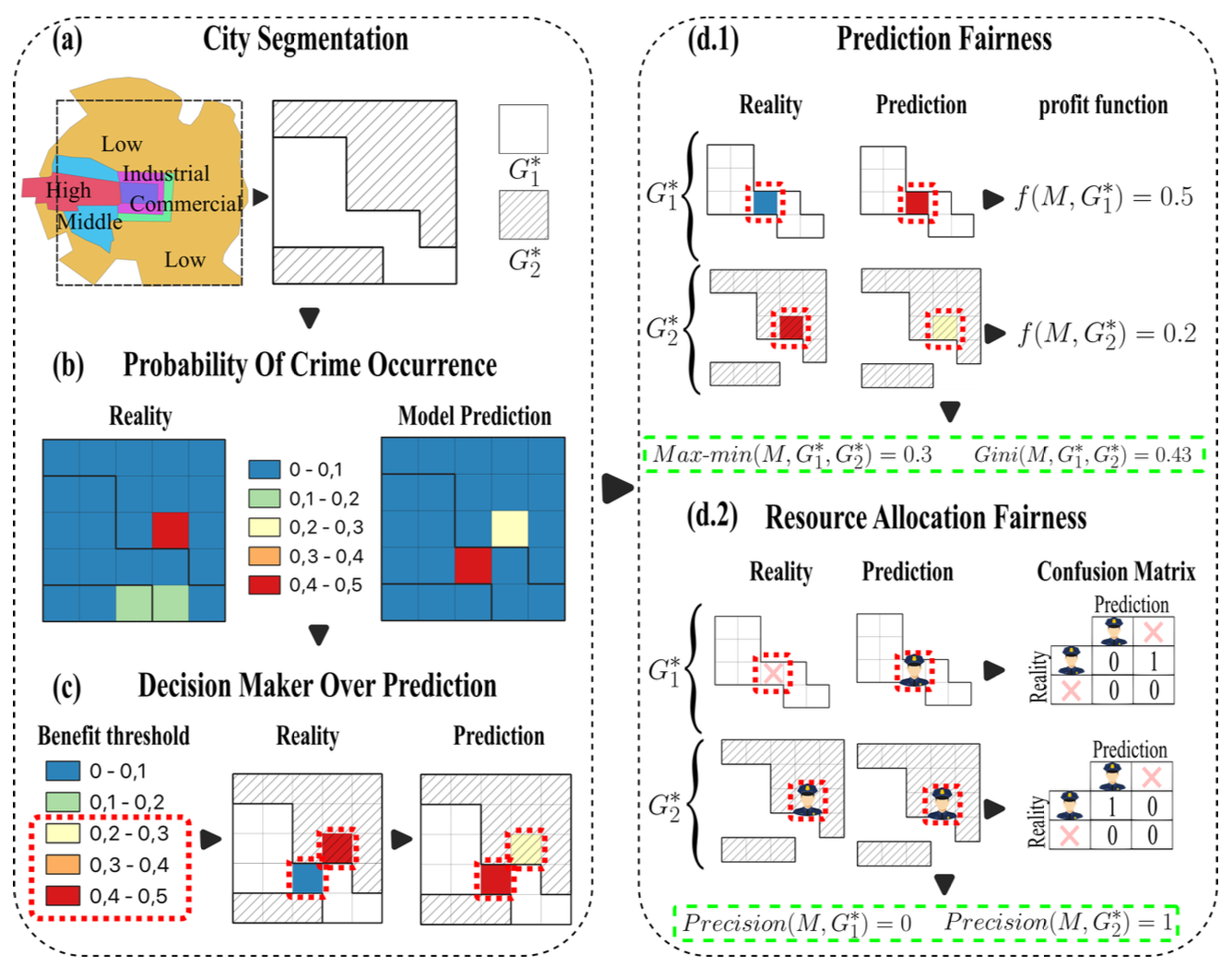
Predictive policing leverages data-driven models to anticipate future criminal events and guide law enforcement strategies. However, concerns about algorithmic fairness have emerged, as these models risk perpetuating discrimination and inequities, particularly among vulnerable populations. While prior research has acknowledged the influence of disparities in crime reporting levels on these models, the extent of their impact on vulnerable populations remains insufficiently understood, posing a critical challenge in societies marked by high disparities. This study seeks to quantify the fairness of three prevalent density probability estimation models used in predictive security. Specifically, it examines their capacity to distribute benefits impartially across diverse populations in various spatial contexts. Real-world theft data were employed to calibrate three distinct predictive models, followed by the quantification of model fairness through two different measurement approaches. These measurements assess disparities in the granting of model benefits between two geographical areas-one focusing on the average prediction error benefit and the other on the utilization of the model for resource allocation. Results suggest that the predictive security models studied may be fair for the prediction but unfair over the use of the model for patrol allocation, with a maximum difference between the means of groups of 45% and an average of these differences of 12%. This highlights the nuanced nature of fairness considerations within predictive policing frameworks.
Quantifying Fairness in Spatial Predictive Policing
Diego Hernández, Cristian Pulido, Francisco Gómez
Submitted to Artificial Intelligence and LawMajor revisions Spotlight
Predictive policing leverages data-driven models to anticipate future criminal events and guide law enforcement strategies. However, concerns about algorithmic fairness have emerged, as these models risk perpetuating discrimination and inequities, particularly among vulnerable populations. While prior research has acknowledged the influence of disparities in crime reporting levels on these models, the extent of their impact on vulnerable populations remains insufficiently understood, posing a critical challenge in societies marked by high disparities. This study seeks to quantify the fairness of three prevalent density probability estimation models used in predictive security. Specifically, it examines their capacity to distribute benefits impartially across diverse populations in various spatial contexts. Real-world theft data were employed to calibrate three distinct predictive models, followed by the quantification of model fairness through two different measurement approaches. These measurements assess disparities in the granting of model benefits between two geographical areas-one focusing on the average prediction error benefit and the other on the utilization of the model for resource allocation. Results suggest that the predictive security models studied may be fair for the prediction but unfair over the use of the model for patrol allocation, with a maximum difference between the means of groups of 45% and an average of these differences of 12%. This highlights the nuanced nature of fairness considerations within predictive policing frameworks.
2020
CO monitoring using Sentinel-5p and GEE: Cundinamarca case in Covid-19 times
John Gualteros, Diego Hernández, Erika Upegui
2020 7th International Conference on Behavioural and Social Computing (BESC) 2020 Spotlight
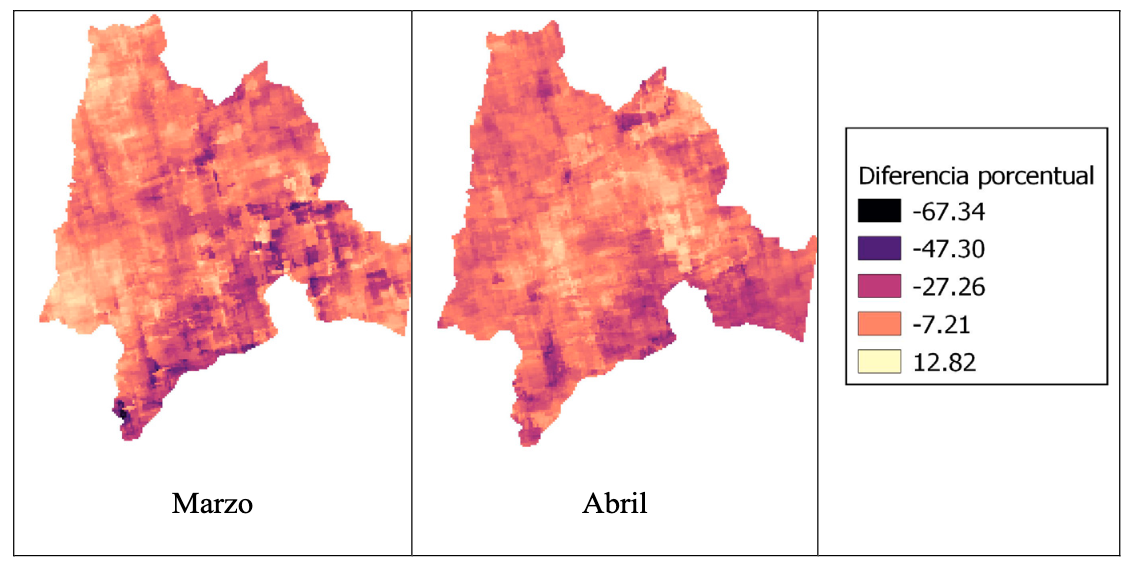
Due to the emergency arising from Covid-19 and the mandatory confinement decreed in Colombia on March 25, 2020, there is an opportunity to review indicators that are associated with respiratory diseases in the country and assess whether the isolations decreed by the national government had anyi mpact on the decrease thereof. The objective of this study is to review the variation in carbon monoxide (CO) present in the air breathed by the inhabitants of the department of Cundinamarca (Colombia) during the first 6 months of 2019 and 2020. The selected time period corresponds to the emergency by Covid-19 from its beginnings until the reopening of economic activities, compared to the same period of 2019 with an industry working at full throttle. With the data provided by Sentinel 5P – Level 2 Tropomi sensor, monthly CO images were created that were downloaded for the period of interest with the help of Google Earth Engine. Subsequently a pixel-by-pixel analysis was performed with the help of Python. Finally, images of carbon monoxide variation were represented in the QGIS software. Results of this study, although they show a significant variation specifically in the months of March and April, show the need to strengthen regulation on air quality issues in a country increasingly burdened by air pollution
CO monitoring using Sentinel-5p and GEE: Cundinamarca case in Covid-19 times
John Gualteros, Diego Hernández, Erika Upegui
2020 7th International Conference on Behavioural and Social Computing (BESC) 2020 Spotlight
Due to the emergency arising from Covid-19 and the mandatory confinement decreed in Colombia on March 25, 2020, there is an opportunity to review indicators that are associated with respiratory diseases in the country and assess whether the isolations decreed by the national government had anyi mpact on the decrease thereof. The objective of this study is to review the variation in carbon monoxide (CO) present in the air breathed by the inhabitants of the department of Cundinamarca (Colombia) during the first 6 months of 2019 and 2020. The selected time period corresponds to the emergency by Covid-19 from its beginnings until the reopening of economic activities, compared to the same period of 2019 with an industry working at full throttle. With the data provided by Sentinel 5P – Level 2 Tropomi sensor, monthly CO images were created that were downloaded for the period of interest with the help of Google Earth Engine. Subsequently a pixel-by-pixel analysis was performed with the help of Python. Finally, images of carbon monoxide variation were represented in the QGIS software. Results of this study, although they show a significant variation specifically in the months of March and April, show the need to strengthen regulation on air quality issues in a country increasingly burdened by air pollution
2018
Characterization of skin patterns in Pseudoplatystoma Magdaleniatum
Gabriel Lozano, Diego Hernández, Nadya Chaves, Mauricio Valderrama, José Mojica, Francisco Gómez
Sustainable Internet and ICT for Sustainability (SustainIT) 2017
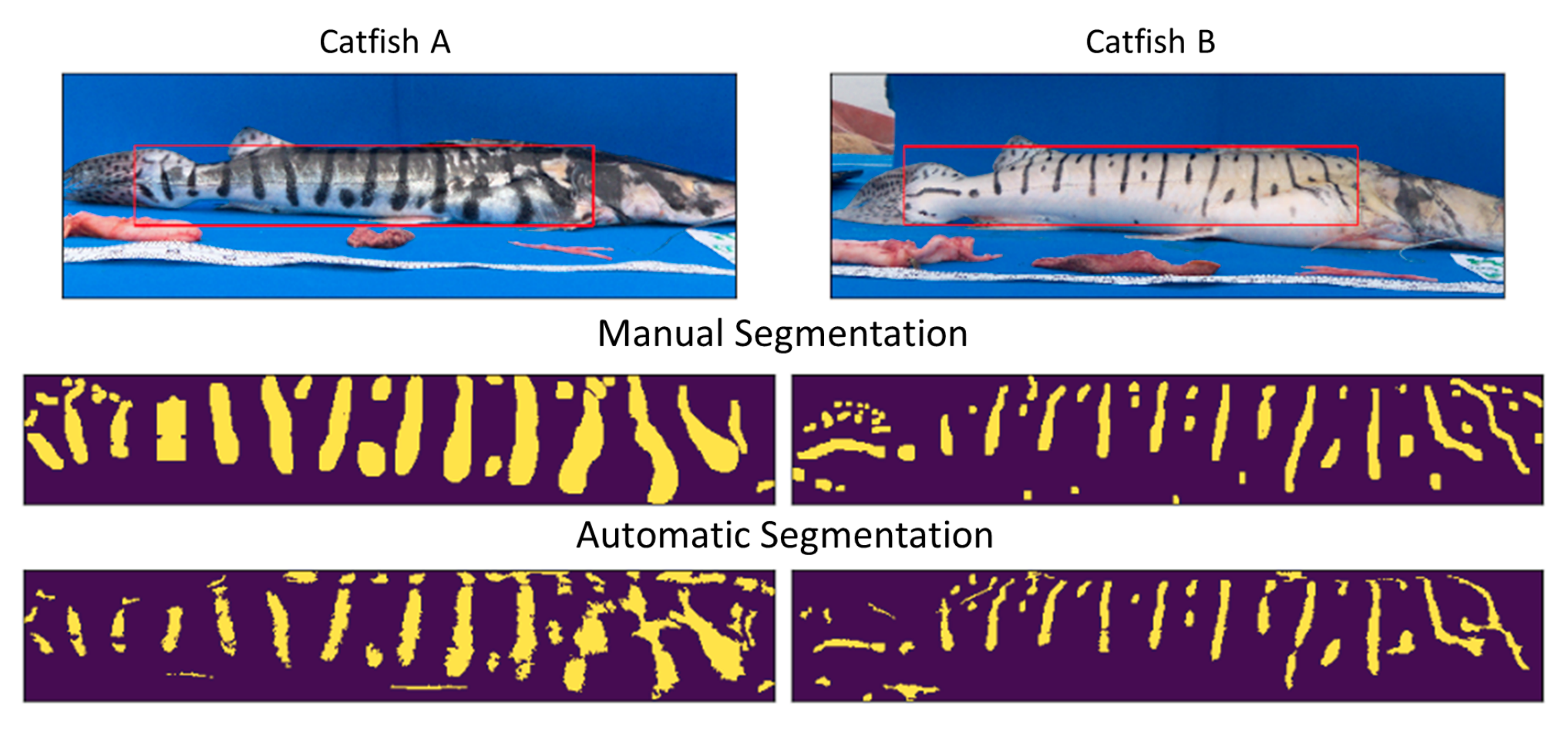
Pseudoplatystoma Magdaleniatum is one of the most representative fish species from the Magdalena river basin in Colombia. This endemic catfish is highly valuable from the economic and environmental perspectives. Nevertheless, it is currently under threat because of the indiscriminate fishery and the degradation of their ecological niche. Strategies for conservation require a detailed individual description. Traditional characterization methods are invasive and time expensive. Here we introduce a novel automatic method to segment and describe the characteristic spot and stripe skin pattern of this specie. The method was evaluated on a photographic database of 50 individuals, which characteristic skin patterns were manually segmented by a trained expert. The proposed approach provides precise skin pattern segmentations and informative geometrical features of these patterns.
Characterization of skin patterns in Pseudoplatystoma Magdaleniatum
Gabriel Lozano, Diego Hernández, Nadya Chaves, Mauricio Valderrama, José Mojica, Francisco Gómez
Sustainable Internet and ICT for Sustainability (SustainIT) 2017
Pseudoplatystoma Magdaleniatum is one of the most representative fish species from the Magdalena river basin in Colombia. This endemic catfish is highly valuable from the economic and environmental perspectives. Nevertheless, it is currently under threat because of the indiscriminate fishery and the degradation of their ecological niche. Strategies for conservation require a detailed individual description. Traditional characterization methods are invasive and time expensive. Here we introduce a novel automatic method to segment and describe the characteristic spot and stripe skin pattern of this specie. The method was evaluated on a photographic database of 50 individuals, which characteristic skin patterns were manually segmented by a trained expert. The proposed approach provides precise skin pattern segmentations and informative geometrical features of these patterns.